Teacher training
Subject and phase-specific training on planning, delivery, differentiation and assessment, using your curriculum and your students' work rather than generic examples.
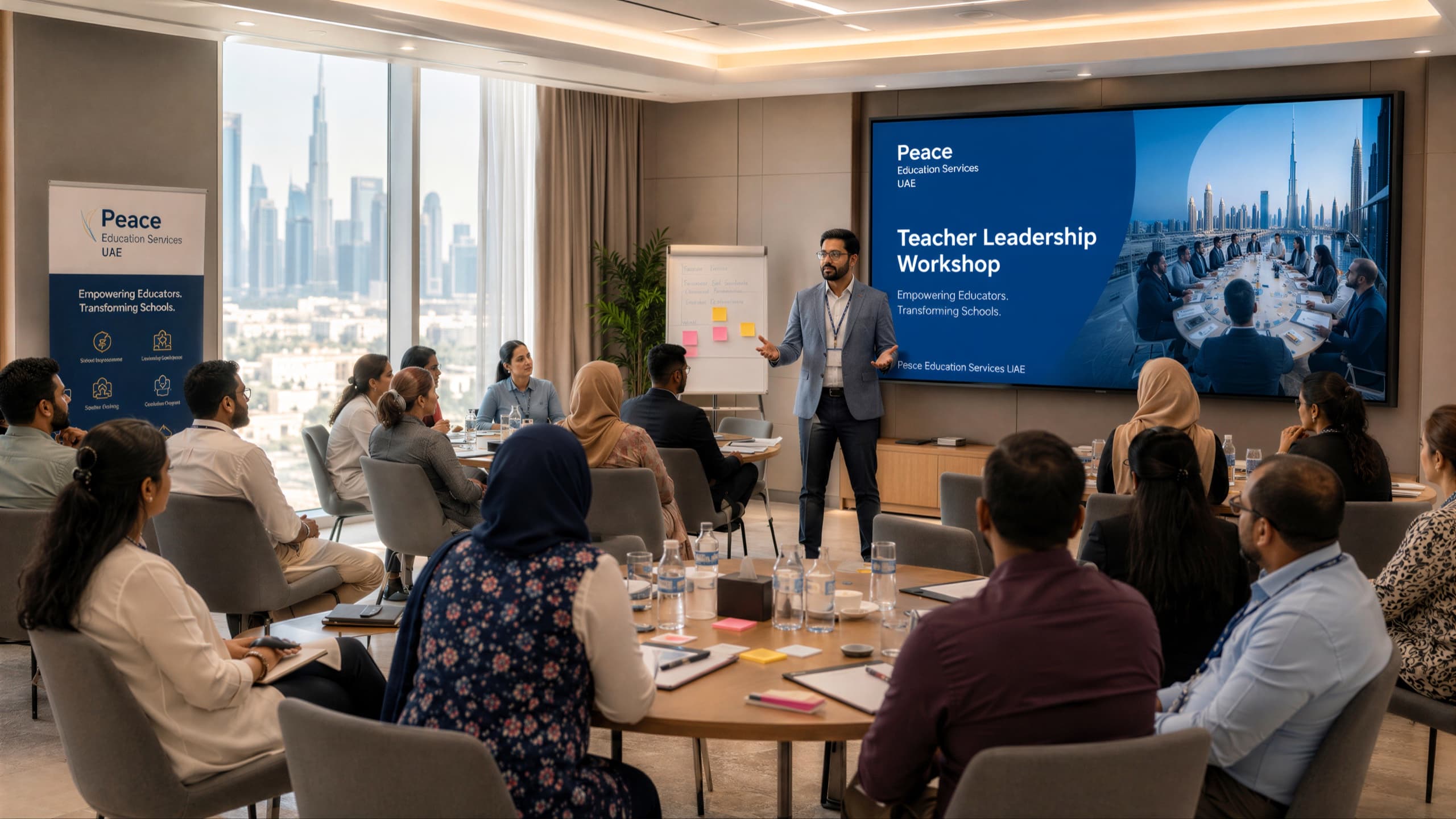
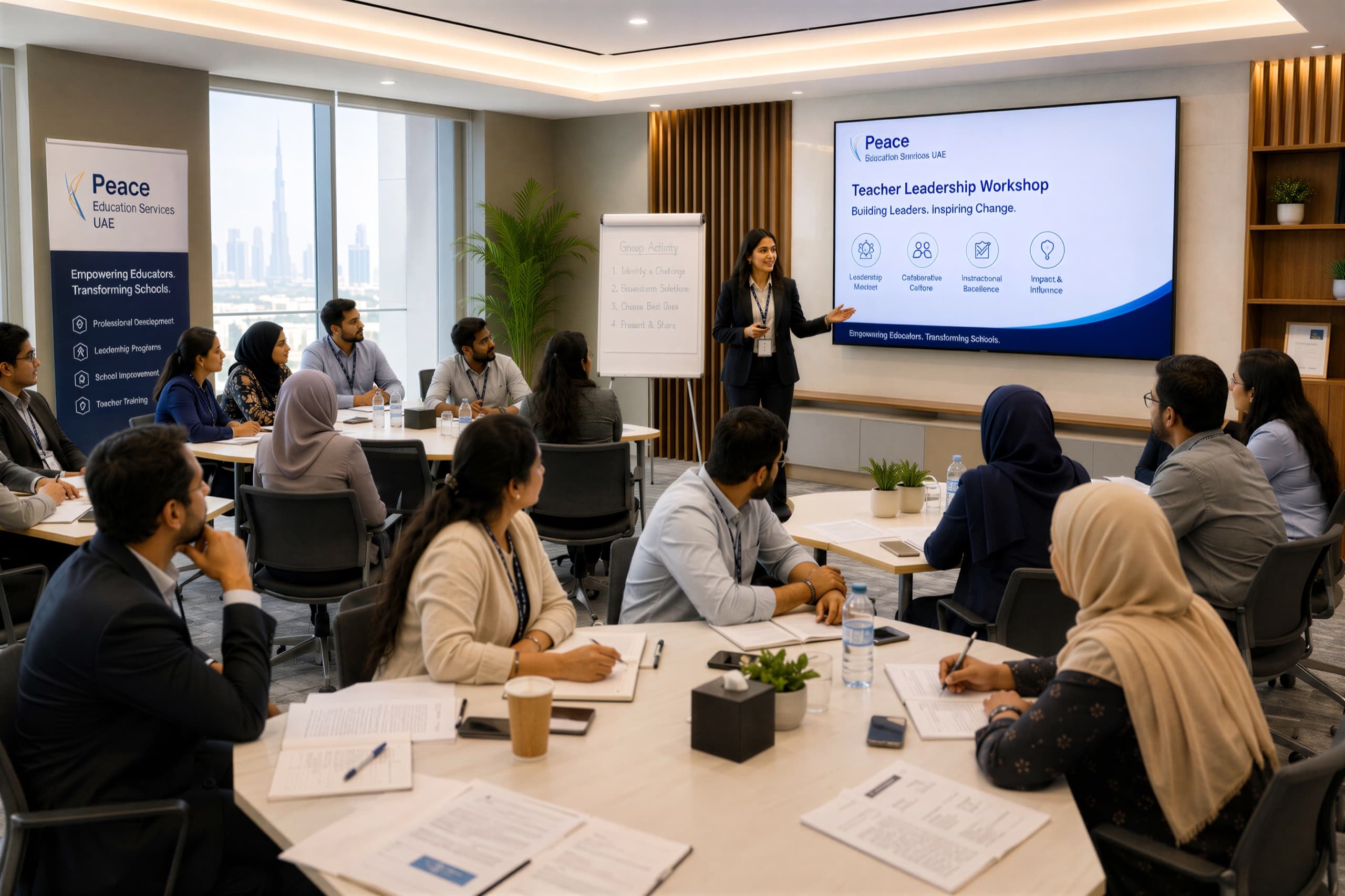
Most professional development is a day out. Ours is built to change something a teacher does on Monday, and then to check in six weeks later that it stuck.
Training
The service
A training day that everybody enjoys and nobody applies is an expensive staff social. We design programmes backwards from a specific change in classroom practice — a questioning technique, a marking policy, a way of opening a lesson — and we build the follow-up into the design rather than hoping it happens.
Sessions are run by practising school leaders and teachers, on your site, with your students' work in the room. Where a programme runs across a term we sequence it so each session lands between the last one being tried and the next one being needed.

Coverage
Eight strands of work, each one explained and pictured. Take the whole of it, or the one strand your school is short on.
Subject and phase-specific training on planning, delivery, differentiation and assessment, using your curriculum and your students' work rather than generic examples.
Middle and senior leadership programmes: line management, holding standards, running a department, and having the conversation nobody wants to have.

Routines, expectations and de-escalation, taught as practised skills rather than as a policy document, with coaching in real lessons.

Planning that fits in the time teachers actually have, with shared schemes of work so a good lesson is written once for the department.

Enquiry, activity-based and student-centred approaches introduced with the classroom-management scaffolding that makes them survive a full class.

Parent conversations, written reports, and the professional communication that decides how a school is experienced from outside it.

Practical routes to giving students more of the thinking, without losing the pace or the coverage the curriculum requires.

A calendar of short, repeatable sessions across the year, with observation and coaching between them so practice compounds.
Deliverables
Deliverables, not intentions. Each of these is a thing that exists at the end of the engagement and can be pointed at.
Sessions sequenced across the year against your term dates and your improvement priorities.
Slides, handouts and exemplars your staff keep, built around your curriculum rather than a generic sample.
Follow-up observation and feedback for the staff who want it, in the weeks after a session, not months later.
What changed in classrooms, what did not, and what the next cycle should therefore address.
Looking ahead
Training fails in the gap between the workshop and the Tuesday lesson. AI is the first tool we have seen that can live inside that gap, so that is precisely where we are putting it.
Development plans built from observation evidence and the school's priorities rather than from whichever course happens to be running this term.
What that looks like
Each teacher opens a plan naming the next two things to work on, and where in the timetable to practise them.
A private tool a teacher can rehearse with — lesson openings, questioning, behaviour scripts — patient, unembarrassing, and available on a Sunday evening.
What that looks like
A new teacher practises the first five minutes of a lesson ten times before standing in front of thirty children.
Lesson observations captured in one structure, so a year of them becomes a picture of the school rather than a folder of forms.
What that looks like
Questioning shows up as the whole school's weakest strand, and next term's training plan writes itself.
In development, and labelled that way deliberately. Ask where each of these stands when you enquire — we will tell you what is running, what is being built and what is still on the bench.
The route
The same five stations every project travels, applied to training.
You tell us the practice you want to change, or hand us the inspection point you have been asked to address.
A costed programme: sessions, sequence, who runs them, and how the follow-up works.
You see the outline and the materials before they are delivered, and we adjust them to your curriculum and your staff.
Sessions run on site, spaced so each one lands between the last being tried and the next being needed.
Coaching in lessons, then a written review of what changed. The review is what turns training into development.
Questions
Yes, and we usually prefer it. Training that happens near a real lesson gets applied to a real lesson; August-only training competes with everything else a teacher is trying to remember.
Workshops work best between twelve and thirty. Above that it becomes a lecture, and lectures do not change classroom practice.
We provide attendance and completion records suitable for your professional-development files. We do not issue accredited qualifications and will not imply that we do.
Pairs well with
Start the conversation
Whether that is thirty teachers, one laboratory, or a building that opens in September, the first conversation is the same.
Start an enquiry